Tools shaped by the way we work, not the other way around.
I’m Michael, the Operations Manager at The Juilliard Store in NYC, and I built the software behind its purchasing, receiving, and special orders.
37,000 SKUs · 100+ supplier accounts · used daily by the whole staff
Selected work
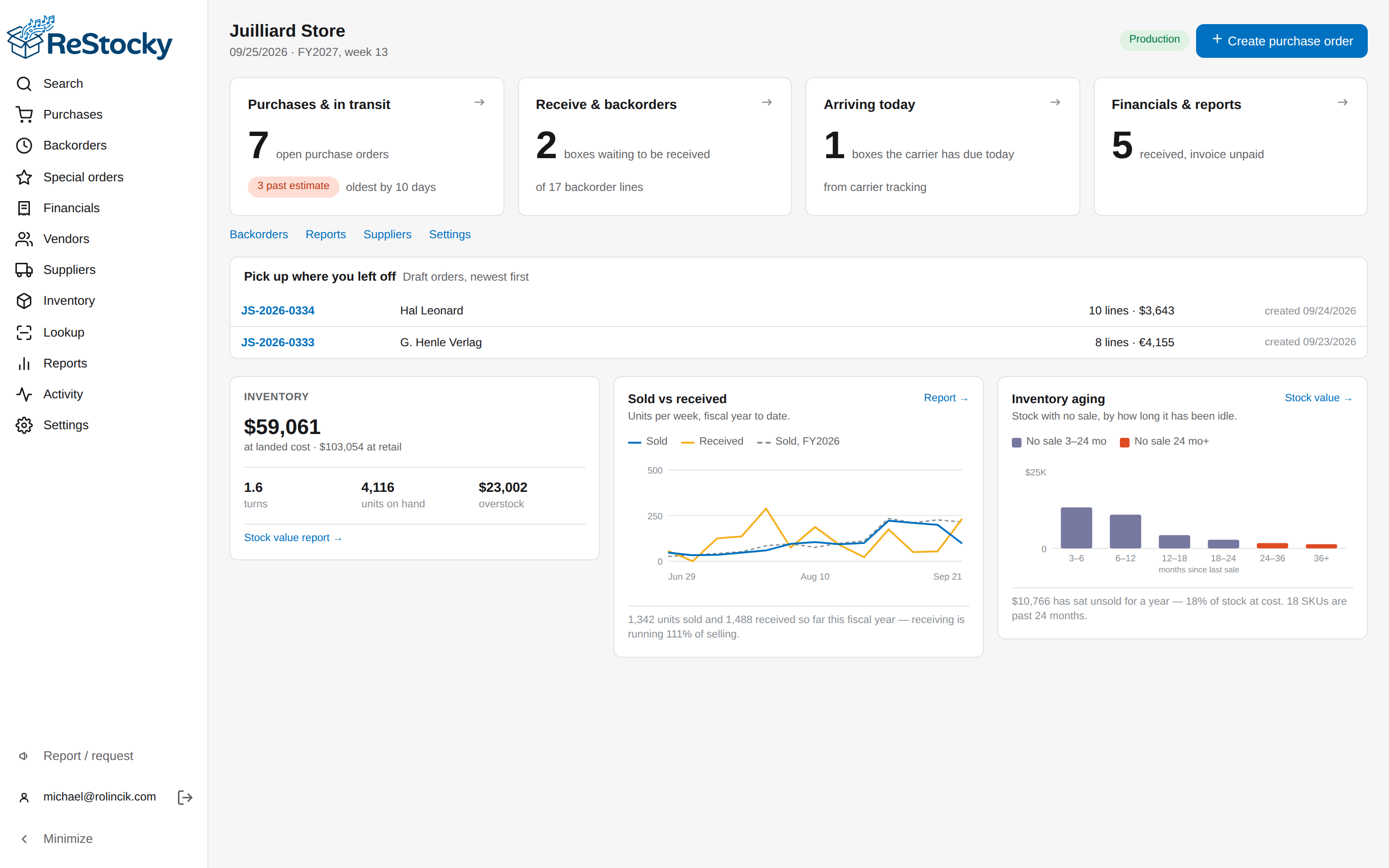
 ReStocky purchasing and receiving
Replaced the store’s purchasing app ahead of its planned shutdown. The shutdown was later postponed, and the team chose to stay on ReStocky.
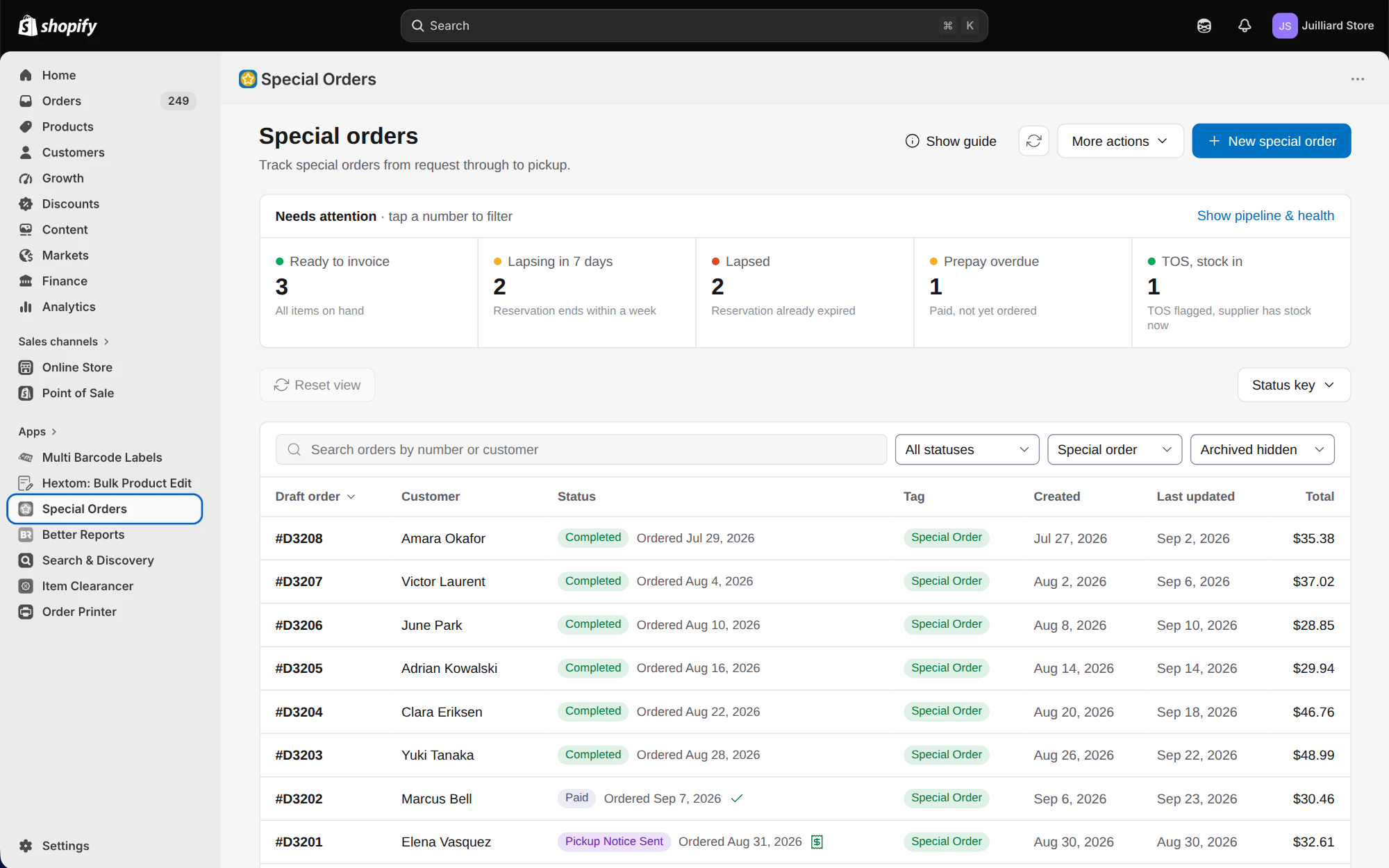
 Special Orders request to pickup
Every special order from the counter to pickup. It started as an order sheet printer and grew one request at a time.
 Item Clearancer
Scan a SKU and get a clearance listing: a manual process of 5 to 10 steps, cut to one.
 Annual Inventory Lookup Tool
Finds any item by where it was last scanned, refined over three inventory counts.
How I work
I run the store’s backend systems, from inventory and receiving to vendor accounting, across 37,000 SKUs and more than 100 supplier accounts. I know the store’s processes from the inside, and I know the people who run them. I’ve seen what worked, where the old tools got in the way, and how staff made up the difference. I turn what I see on the floor into software designed for the way people actually work, intuitive enough that the whole staff uses it daily with minimal retraining.
My coworkers are my clients.
I ship the smallest thing that helps, then let the people using it tell me what comes next.
Change what’s broken, not what people know.
Every change to a familiar workflow costs the team something, so each one has to earn its place.
Know what not to build.
A feature that makes a tool harder to use isn’t worth having, even if it’s easy to build.
Every decision is mine to defend.
I build with AI-assisted development (Claude Code) as a force multiplier. The architecture, the data models, and every design decision are mine, and I can defend each one.
Music, sociology, operations, software. How they fit together →
If your team is working around its tools, let’s talk.
Contact